
Invisible Grills vs Safety Nets – Which Is Better for Your Balcony?
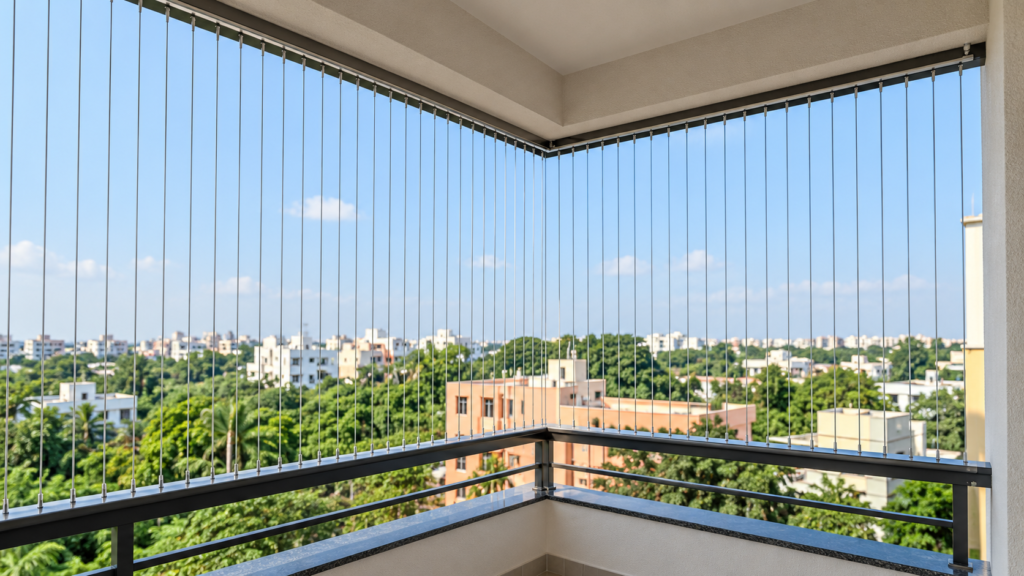
Introduction Balcony safety is an important consideration for homeowners, particularly those living in high-rise apartments. With different protective solutions available, choosing the right option can sometimes be confusing. Two popular choices are invisible grills and balcony safety nets. Both can help protect certain openings, but they differ in materials, appearance, construction, durability, and intended applications. Understanding these differences will help you make an informed decision for your home. What Are Invisible Grills? Invisible grills are protective barriers manufactured using thin stainless steel cables held under tension. They are designed to provide a relatively unobstructed view while complementing contemporary home architecture. Invisible grills are frequently considered for apartment balconies, windows, and duplex openings. Their effectiveness as a safety barrier depends on cable strength, spacing, anchoring, and correct installation. What Are Safety Nets? Safety nets are mesh-based systems installed across suitable openings. They are available in different materials, mesh dimensions, and configurations for applications such as child protection, pet containment, and bird prevention. A major advantage of netting is its ability to cover openings with a relatively lightweight mesh structure. However, netting intended for pigeon control or general enclosure is not automatically suitable for human fall protection. Invisible Grills vs Safety Nets: Key Differences Feature Invisible Grills HDPE Nylon Nets Material Stainless steel cables Nylon, HDPE, or specialized netting Appearance Sleek and minimalist Visible mesh pattern Outdoor view Generally clearer Depends on mesh thickness Durability Potentially long-lasting with suitable materials Depends on net material and UV exposure Maintenance Cable and anchor inspections Mesh and attachment inspections Cost Often higher upfront Often lower upfront Best suited for Discreet balcony and window barriers Application-specific protective enclosures 1. Safety and Protection Both solutions can serve useful protective functions when designed for the relevant hazards. Invisible grills can provide a firm cable barrier across balcony openings, while appropriately engineered safety nets can help enclose spaces or provide protection for specific uses. The choice should be based on verified system performance rather than simply the thickness of the cable or net. For homes with young children, balcony railings, climbing hazards, opening dimensions, and the security of attachments must all be evaluated. 2. Design and Appearance For homeowners who prioritize aesthetics, invisible grills are often an attractive option. Their narrow cables blend into the background, making them suitable for modern balconies with scenic views. Safety nets create a more noticeable mesh pattern, although thinner netting may be less visually prominent. If maintaining a minimalist architectural appearance is your main priority, invisible grills may be the preferred choice. 3. Durability and Weather Resistance Invisible grills manufactured using suitable stainless steel grades can offer good corrosion resistance. However, cables, tracks, fasteners, and anchors all require periodic maintenance. Outdoor safety nets are also available in weather-resistant materials, but UV exposure, moisture, and physical wear may reduce their service life. Always ask the installation provider about material specifications, inspection requirements, warranties, and replacement recommendations. 4. Installation and Maintenance Invisible grill installation typically requires accurate measurements, supporting tracks or anchors, and properly tensioned cables. Safety net installation involves selecting the correct mesh, creating secure attachment points, and ensuring adequate coverage. Neither system should be installed into unsuitable structural surfaces. Professional assessment is particularly important for high-rise apartments where installation failure could have serious consequences. 5. Cost Considerations The overall cost of invisible grills or safety nets depends on several factors, including: Safety nets are frequently less expensive initially, while invisible grills may offer a longer service life depending on their construction and environmental exposure. Compare the total expected ownership cost, not just the initial installation price. Which Option Should You Choose? Choose invisible grills when: You want a minimalist appearance, clearer balcony views, and a cable-based barrier that is engineered for the intended application. Choose safety nets when: You need a purpose-designed mesh enclosure, such as suitable bird prevention or pet containment netting, or another verified safety net system. In certain situations, homeowners may use both products for different purposes. For example, invisible grills may serve as a balcony barrier while a separate bird net helps prevent pigeons from entering. Such a combination should be evaluated to ensure it does not obstruct emergency escape routes or conflict with building rules. Frequently Asked Questions Are invisible grills better than safety nets? Neither product is universally better. Invisible grills are often preferred for unobstructed views and modern aesthetics, while nets are useful for different enclosure applications. Safety performance must be assessed for the specific installation. Can invisible grills be installed in high-rise apartments? Yes, subject to appropriate structural support, engineering considerations, building regulations, and housing society permission. Are safety nets suitable for children? Only safety net systems specifically designed and verified for the intended child-safety application should be considered. Standard bird safety nets are not a substitute. Do invisible grills require maintenance? Yes. Cable tension, corrosion, fasteners, tracks, and anchors should be inspected according to the manufacturer’s or installer’s recommendations. Conclusion Invisible grills and safety nets offer different benefits for residential balconies. Invisible grills are a popular choice for contemporary homes because they combine a discreet appearance with cable-based protection. Safety nets can be useful for purpose-specific applications, including pet enclosures and bird prevention. The best choice depends on your balcony design, family requirements, budget, and the safety performance of the complete installation. Investing in appropriate, professionally installed protection can help make your balcony a more comfortable and secure space.
Balcony Safety Nets – Why Every High-Rise Apartment Should Consider Them
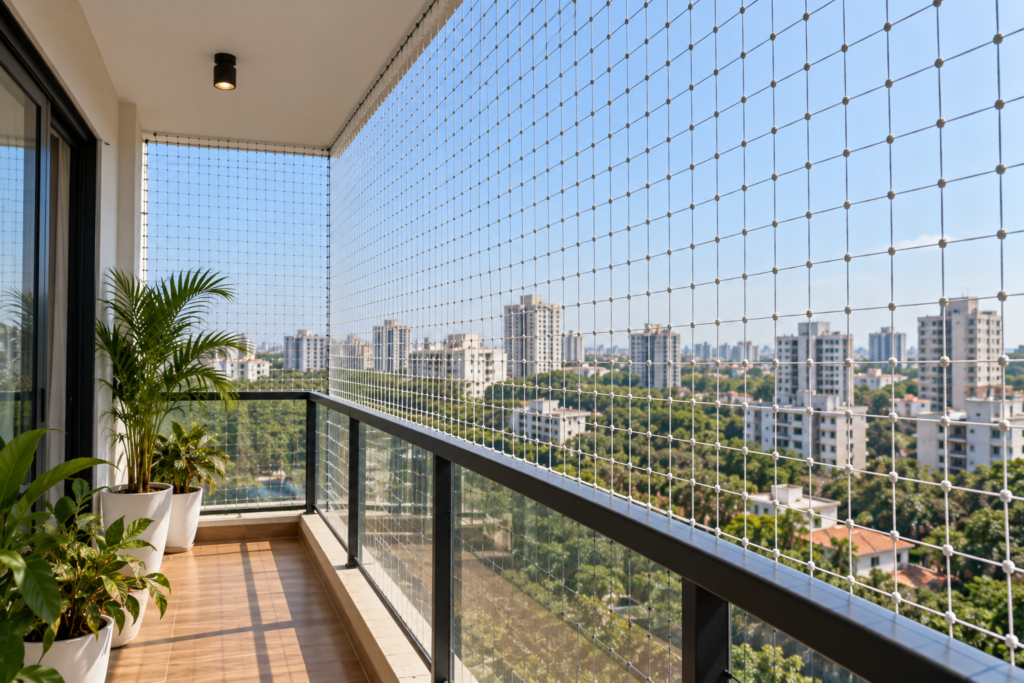
Introduction Living in a high-rise apartment offers beautiful views, natural light, and fresh air. However, elevated balconies and open spaces also require careful attention to safety. For families with children or pets, balcony safety becomes particularly important. Balcony safety nets provide an additional protective barrier across suitable openings, helping reduce exposure to fall hazards when correctly designed and installed. Their relatively discreet appearance and adaptable installation make them a practical option for many residential properties. What Are Balcony Safety Nets? Balcony safety nets are protective mesh systems installed across balconies, windows, or other designated openings. Depending on the intended application, these nets may be manufactured using nylon, polyethylene, or other engineered materials. However, not every net sold for balcony use is suitable for fall protection. A net intended to prevent pigeons from entering a balcony may not be designed to withstand the forces associated with a person falling against it. Choosing the right system for the intended safety purpose is essential. Benefits of Installing Balcony Safety Nets 1. Additional Protection for Children Children are naturally curious and may explore balcony edges, railings, and open spaces. Properly designed child-safety net systems can provide an additional barrier against accidental falls. They must complement, rather than replace, appropriate balcony railings, supervision, and other childproofing measures. 2. Protection for Pets Cats and other pets may attempt to climb, jump, or squeeze through balcony openings. Suitable pet safety nets can help create a more controlled balcony environment. The material, mesh size, attachment method, and resistance to chewing or climbing must be appropriate for the animal. 3. Suitable for Many Balcony Designs Safety net systems can be configured for different balcony layouts, subject to structural suitability. They may be useful for apartments, duplex homes, and certain open stairwell or terrace areas. 4. Flexible Installation Options Some netting systems can be fitted without the visual bulk of traditional metal enclosures. Installation requirements vary depending on the surface, dimensions, anchors, and purpose of the net. 5. Weather-Resistant Options Outdoor safety nets are available in UV-stabilized and weather-resistant materials. Exposure to sunlight, moisture, abrasion, and pollution can still weaken netting over time, making inspections and timely replacement important. Types of Nets Used Around Homes Different applications require different net specifications. Child safety nets: Designed to provide an additional barrier where a child could reach an opening or fall hazard. Pet safety nets: Selected with appropriate mesh size, material strength, and secure attachments to suit specific animals. Anti-bird safety nets: Intended to discourage birds from entering balconies and other spaces. These should not be treated as human fall-protection systems. Debris protection nets: Used in appropriate construction or maintenance settings to contain falling materials. These have different requirements from residential balcony safety systems. How to Choose the Right Balcony Safety Net Before installation, homeowners should evaluate: For fall-risk applications, seek documented evidence that the complete system is appropriate for its intended protective function. Maintenance Tips for Balcony Safety Nets Inspect the net periodically for cuts, fraying, loosened knots, weather-related damage, and weak attachment points. Avoid hanging heavy objects from the net or relying on it as a support for climbing. Replace damaged or degraded components promptly, and follow the installer’s inspection schedule. Conclusion Balcony safety nets can be a valuable addition to home safety planning, especially in high-rise residential buildings. However, effectiveness depends on using a net designed for the specific hazard, supported by secure anchoring and suitable installation. A well-planned balcony protection system helps families enjoy their outdoor space with greater confidence.